1. What is this fundraiser about?
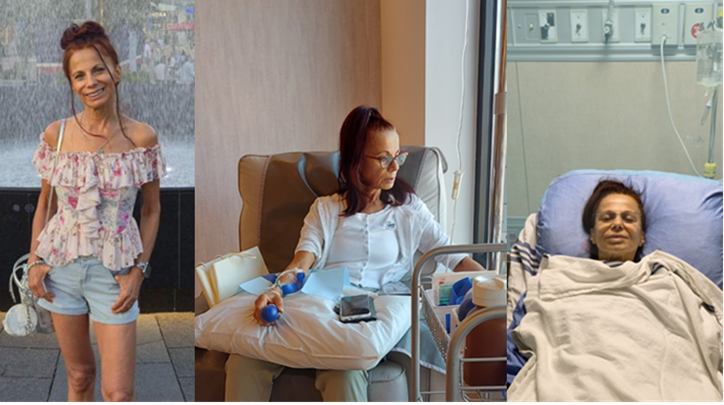
This campaign was created to help cover the ongoing treatment expenses for Margarita, who is fighting Stage 3 breast cancer affecting both breasts. The treatments have been showing positive results, but the cost of care goes far beyond what insurance or public health coverage provides. For more than 25 years, Margarita has given selflessly, supporting a charity organization and causes close to her heart. Today, she is the one who needs help. The funds raised go directly toward her essential treatments, procedures, therapy and tests.
2. Why does Margarita need financial help?
Although she has managed her expenses as best she can, the treatment costs are around $2,000 per week ($8,000 per month) out of pocket. Nearly all of the family’s available funds have been exhausted, and without help, she won’t be able to afford the vital treatments she depends on. Additionally, she will be forced to discontinue the therapies that have been helping her stay stable and hopeful. Every contribution, no matter the amount, directly helps her continue the care that is essential to her survival.
CRITICAL INCONSISTENCIES IN MARGARITA’S HOSPITAL CARE - PART I
Legal Notice
Any defamation (libel) proceeding that may be brought in the future against Dimitre Popov by any party referenced herein will be defended with conclusive evidence and may result in a counterclaim seeking punitive, exemplary, and aggravated damages, together with any other relief available at law.
3. Why isn’t Margarita receiving chemotherapy or radiation if they are covered by OHIP?
A. Margarita has a G6PD enzyme deficiency, a condition affecting approximately 8% of the global population. During consultations, Dr. Long Nguyen, a scientist and staff medical oncologist at Princess Margaret Cancer Centre, persistently pressured Margarita to undergo chemotherapy under his supervision. After further clarification was sought and under sustained pressure, he acknowledged that chemotherapy could be life-threatening for Margarita given her enzyme deficiency and severely weakened condition. At that time, her weight had dropped to 39 kg (86 pounds) from 48 kg (106 pounds) six months earlier.
B. A resident physician with a PhD, who was part of Dr. Nguyen’s oncology team, told us that chemotherapy contributes approximately 5% to the total benefit of conventional cancer treatment, which includes radiotherapy and surgery. When Dr. Long Nguyen joined the consultation 15 minutes later, I asked him the same question. He referred me back to the resident physician, saying, “She can tell you.” I insisted on hearing the answer directly from him and asked what percentage chemotherapy contributes to the overall treatment benefit. After consulting his phone, he answered, “27+%.”
C. The potential benefit of chemotherapy in controlling breast cancer is estimated to be up to 5%. In some cases, it offers no benefit at all. Medical reports have also documented serious side effects, including heart and kidney failure. Physicians have a professional duty to inform patients of all significant risks associated with the treatments they recommend or the drugs they prescribe. Margarita’s oncologist and radiologist disclosed only part of chemotherapy’s serious side-effect profile—specifically, the substantial risk of serious heart damage from the drugs that would be administered.
D. During a casual conversation with an administrator at the facility where Margarita receives therapy three times a week, I mentioned that Margarita is not undergoing chemotherapy. With visible sorrow, she said: “Chemotherapy killed my mom. We did everything to save her, but we couldn’t. If I had known, she never would have had it, but the doctors were so pushy about it.”
E. With her fragile health and G6PD condition, radiation therapy could be more harmful than beneficial. It can severely weaken the immune system — the very defense the body needs to keep fighting cancer. In many cases, cancer treated with radiation returns and becomes fatal, while many patients experience a decline in post-treatment quality of life. Data also indicate that approximately 20% of all diagnosed cancers are linked to radiation exposure from medical imaging.
4. Why was there confusion about the location of Margarita’s most aggressive cancer?
During Margarita’s hospital care at Princess Margaret Cancer Centre—a hospital widely regarded as one of the top cancer centres in the world—there was a troubling discrepancy about the location of her most aggressive cancer.
In February, her surgeon, Dr. Wey Liang Leong (Director of the Breast Surgical Oncology Department), told us that the most aggressive tumour was in her right breast. However, at the first post-surgery appointment in July, Dr. Leong stated that the most aggressive cancer was actually in the left breast—directly contradicting both his earlier statements and the hospital’s own reports.
The oncologist, Dr. Nguyen, also gave conflicting information and later admitted that a pathologist’s report had been corrected only after he noticed an error. When I asked how he could assure us that no other mistakes had occurred or would occur throughout treatment, he had no answer and simply shrugged.
5. What conflicting information did the doctors give about whether removing both breasts would prevent the cancer from returning?
Margarita’s first appointment at the Princess Margaret Cancer Centre (PMCC) was on March 11, 2025, with surgeon Dr. Leong, director of the breast surgical oncology department.
During the visit, Dr. Leong outlined Margarita’s treatment options. He explained that many patients choose to remove both breasts and that doing so would eliminate the need for chemotherapy or radiation. This led Margarita to seriously consider that option.
However, during our initial consultation with the oncology team, a resident physician holding a PhD told us that cancer could still recur even after full removal — contradicting the surgeon’s statements. This was later confirmed again by Dr. Anne Koch, Radiation Oncologist and Associate Professor, during our first appointment with her.
6. What other conflicting information was given about Margarita’s surgery?
At our consultation meetings, the surgeon, Dr. Leong, told us that he might need to remove 1 or 2 lymph nodes for examination while removing the two tumors from Margarita’s breasts.
However, minutes after the operation on June 25, he informed me by phone that he had removed 5 lymph nodes. He repeated this to Margarita once she was out of the operating room and again at the post-surgical consultation on July 24. The hospital’s written report also stated that 5 nodes had been removed.
But at our first appointment on August 6 with Radiation Oncologist and Associate Professor Dr. Anne Koch, she told us that 7 lymph nodes had in fact been removed—2 from the left breast area and 5 from the right. This directly contradicted both the surgeon’s statements and the hospital’s earlier report.
Additionally, during our meeting with the medical oncologist, Dr. Nguyen, he informed us that the surgeon, Dr. Leong, wanted to perform another surgery on Margarita, even though this had never been mentioned at our follow-up appointment one month after the operation.
Please consider making a generous donation to help Margarita continue her vital treatments.
SIDE NOTE
- More information and supporting details will be made available in a future update.
- If you have a cancer story you wish to share, email us at Contact@SaveMargarita.ca
WHO’S WHO
A list identifying organizations and prominent Canadians who ignored requests or refused to provide life-saving support to Margarita’s fight for her life will be published shortly.
MARGARITA’S CANCER TREATMENT APPROACH
7. What treatment protocol is Margarita currently following?
Margarita follows a comprehensive, integrated treatment protocol based on evidence and firsthand reports from individuals who have successfully overcome even advanced-stage cancer with minimal or no side effects. Since her diagnosis, she has carefully studied and compared different cancer treatments and has developed a personalized treatment plan.
8. What does Margarita do for the treatment of her breast cancer?
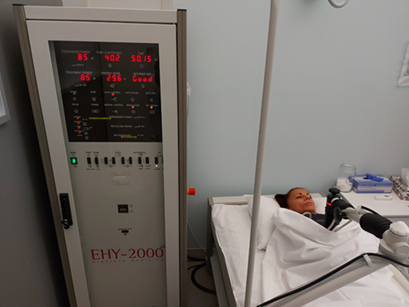
The ultimate goal of Margarita’s treatment is to stop the growth and spread of cancer cells and to destroy those responsible for tumor formation. The treatment she follows is comprehensive, produces little to no side effects, and allows her to function as a normal person. Unfortunately, the fellow Canadians approached during the Christmas season through the distribution of over 700 flyers reacted with indifference to Margarita’s fight for her life, making it impossible to raise the $13,000 needed to include another powerful treatment.
To support bodily conditions that weaken cancer cells while strengthening immune response, Margarita monitors several aspects of her body daily with tools and adjusts her intake when necessary.
Food plays a key role in the fight against cancer. Because this specialized food is not commercially available, Margarita prepares it herself and consumes it at carefully scheduled times. Due to the strict timing of her treatment schedule, she eats at least one daily meal in the car, often while traveling to or from therapy, along with cancer-targeting substances.
At home, she carries out additional treatment-related procedures, performs certain exercises three times per week, and completes other exercises daily.
Here is Margarita’s intake schedule:
First thing in the morning, on an empty stomach, she takes one substance.
During breakfast, she takes six different substances.
At 9:30 a.m., she takes another substance.
At 10:00 a.m., she takes five different substances.
At 11:30 a.m., another substance.
At 12:00 p.m., during lunch, she takes eight different substances.
At 2:30 p.m., another substance.
At 3:00 p.m., with a snack, she takes five different substances.
At 5:30 p.m., another substance.
At 6:00 p.m., during dinner, she takes six different substances.
At 8:00 p.m., another substance.
At 10:00 p.m., she takes three different substances.
Before bedtime, at 11:30 p.m., she takes another substance.
9. Is Margarita’s treatment working?
Yes. Margarita’s integrated treatment is showing clear signs of improvement. For example, just two months after beginning her plan, the lead surgeon at Princess Margaret Cancer Centre reviewed her latest breast imaging and remarked with surprise, “Interesting—both tumors look smaller.”
As a side note, Margarita’s treatment protocol, strategy, and experience could help and bring hope to others who have been diagnosed with, or are currently fighting, this relentless disease.
Please consider making a generous donation to help Margarita continue her vital treatments.